

Consistency is built by a routine you can repeat, not an ambitious plan you can barely sustain. To learn how to build a consistent workout routine, choose activities you enjoy, set a manageable schedule, and increase the challenge gradually. For a weekly target, the World Health Organization recommends adults aim for at least 150 minutes of moderate activity or at least 75 minutes of vigorous activity.
It’s easy to assume that a workout routine needs long, demanding sessions to make a difference. In practice, shorter workouts that fit your day can be easier to repeat, and regular exercise can support physical and mental well-being.
This guide explains how to set attainable goals, choose activities you enjoy, and build a flexible schedule around real life. It also covers recovery and how to return after a disruption, so your routine stays useful instead of becoming another source of pressure.
Key Takeaways
- Regular movement can support physical and mental well-being; the World Health Organization recommends adults aim for at least 150 minutes of moderate activity or 75 minutes of vigorous activity each week.
- Set a clear, achievable goal and track your progress so each completed session helps reinforce motivation.
- Choose activities you enjoy and vary your movement to make exercise more engaging and give different muscle groups time to recover.
- Build a schedule around your real commitments, allow for rest, and resume after disruptions rather than abandoning the routine.
1. Physical and mental benefits of regular exercise
Regular exercise supports heart health, strength, endurance, balance, and flexibility. The World Health Organization recommends adults aim for at least 150 minutes of moderate exercise each week, or at least 75 minutes of vigorous activity each week. A focused 20-minute workout can provide exercise benefits. Thirty minutes of exercise a day can boost heart health.
Movement can help maintain a healthy weight, strengthen bones and muscles, ease stress, improve mood, and support better sleep. Regular activity can lower the risk of heart disease, type 2 diabetes, and certain cancers. Exercise can improve or help prevent common mental health issues, including depression and anxiety disorders.
Motivation is steadier when exercise has a dependable cue. Choose a fixed time and place, such as jogging at 7 a.m. in the same park. Put each session in your calendar and prepare your shoes beforehand. Repeating the time, place, and first action reduces daily decisions and makes starting easier.
After a break, return gradually: shorten sessions or reduce intensity, then build up duration and effort. If you’re new to exercise, returning after a long break, or have health concerns, consult a healthcare provider before starting a new program. For older adults and people living with diabetes or arthritis, regular exercise can help maintain mobility and overall health. Start slowly, use proper form, and pay attention to how your body responds to unfamiliar activities.
How much rest do you need between workouts? Allow enough time for your muscles to recover; rest days can help you return refreshed. Your recovery needs depend on workout intensity and how your body feels before training. How can you prevent injuries and avoid overtraining? Increase duration and intensity gradually, use proper form, and watch for signs of strain. Unusual fatigue, soreness, or frequent illnesses can be a sign to pause.
2. Building motivation through goal achievement
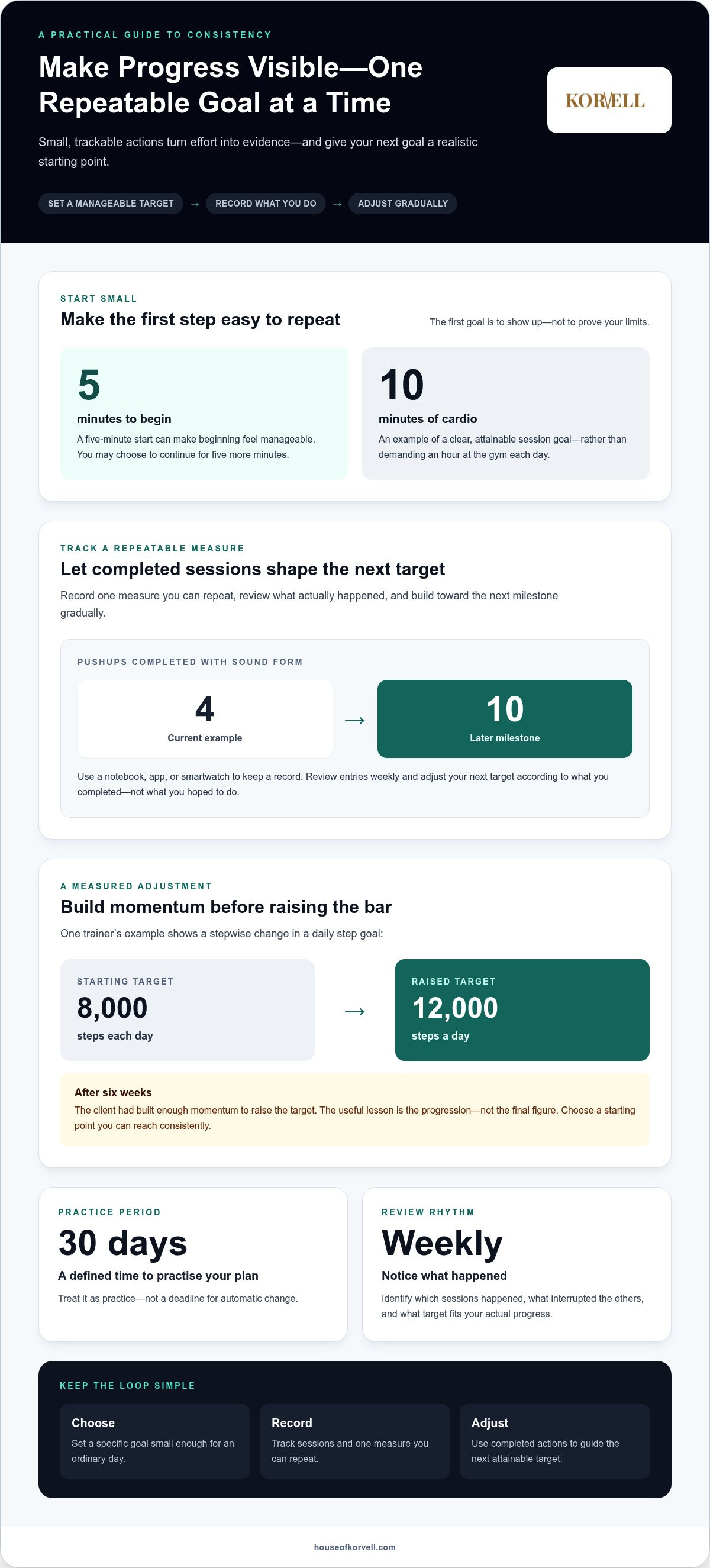
A clear goal gives each fitness session a defined purpose. Make it small enough to complete on an ordinary day, then record whether you did it. For example, begin with 10 minutes of cardio rather than demanding an hour at the gym each day. A five-minute start can also make the first step feel manageable; once you begin, you may choose to continue for five more minutes. The first goal is to show up, not to prove your limits.
Make progress visible. Track sessions in a notebook, app, or smartwatch, and note one measure you can repeat, such as pushups completed with sound form. If you currently manage 4, set 10 as a later milestone and build toward it gradually. A record turns effort into evidence, which can encourage you when motivation feels uneven. Review your entries weekly and adjust the next target according to what you completed, not what you hoped to do.
Keep goals specific and realistic. A daily step goal should reflect your current activity, then rise only after it feels sustainable. One trainer lowered a client’s target to 8,000 steps each day; after six weeks, she had built enough momentum to raise it to 12,000 steps a day. The useful lesson is the progression, not the final figure. Choose a starting point you can reach consistently, then make a measured adjustment.
Try a 30-day commitment as a defined period for practising your plan, not as a deadline for automatic change. Use a weekly review to identify which sessions happened and what interrupted the others. If you want a clearer training structure, Virtual Personal Training can provide guided support for setting and following a fitness plan. Let completed actions shape the next goal. Consistent evidence builds a more durable feeling of progress than ambitious targets alone.
An hour at the gym can be a goal; a five-minute start may lead to five more minutes. A smartwatch, app, or notebook can record progress from 4 pushups toward 10 and sustain motivation.
3. Choosing varied and enjoyable activities
Choose movement you can see yourself repeating, not just an activity that looks impressive. If you enjoy walking, you may stick with it more easily than a class you dread. Strength training can anchor your routine, while walking, cycling, dancing, or yoga adds variety. Choose activities that suit your preferences, access, and energy, then notice which sessions you look forward to repeating.
Use variety with a purpose. Different activities work different muscle groups, giving some areas time to recover while others are active. For example, alternate strength training with a walk or gentle mobility practice. Changing pace can make the week feel less repetitive without dropping strength work. Keep a simple note of each activity and how your body feels afterward.
Starting small helps you test an activity without overcommitting. Walking up and down stairs for 10 minutes is one way to add movement at home. You might also sample a dance session or a beginner-friendly class before making it part of your regular plan. Focus on whether the activity feels manageable, engaging, and practical to repeat.
Give a new approach time to see whether it suits you. If your workouts feel stale or progress has stalled, a trainer suggests trying a different type of workout after four weeks. Change one element at a time, such as the activity, setting, or session structure. That makes it easier to tell what improves enjoyment and what gets in the way of consistency.
Keep the decision personal. One respondent began jiu jitsu at age 44, illustrating that a new activity can start at different stages of life. Another client lost 15 pounds after changing her routine to yoga, though that outcome is an individual example, not a promise. Let enjoyment, recovery, and repeatability guide your choice. A varied routine works best when each activity has a clear place in it.
4. Building a flexible and realistic routine
To understand how to build a consistent workout routine, begin with time you can protect, not an ideal week without interruptions. Block three 30-minute slots in your calendar as a practical starting structure. Place them before or after work, or during lunch, so exercise does not compete with your busiest commitments. Treat each slot as an appointment, then prepare a shorter alternative for days when plans change.
What is the recommended amount of weekly exercise for adults? The World Health Organization recommends at least 150 minutes of moderate activity each week, or at least 75 minutes of vigorous activity each week. Build toward the target in a way that fits your starting fitness level and weekly schedule.
How many days a week should beginners work out? Choose a schedule you can repeat while leaving room for recovery. Your starting point depends on your current activity level, available time, and how you feel after sessions. Add workouts only when your existing schedule feels manageable.
How do you create a balanced weekly workout plan for strength and cardio? Combine strength sessions with cardio and leave time for recovery. For example, plan one strength session, a brisk walk, then another strength or cardio session based on your needs. Arrange the week around your schedule and recovery.
How long should each workout session last? A focused 20-minute workout can provide exercise benefits, and three 10-minute exercise sessions a day can work as well as one 30-minute workout. Choose a duration that suits the day rather than skipping movement because your full session will not fit.
What is the best beginner workout routine at home or in a gym? At home, start with controlled bodyweight movements such as chair squats, wall pushups, and hip hinges, then add a walk for cardio. At a gym, use familiar equipment with light resistance and focus on deliberate form. Knowing how to build a consistent workout routine also means planning for disruptions: if a late meeting displaces a gym visit, do a home session or resume with your next planned workout.
House of KORVELL: Men's Foundations
House of KORVELL’s Men’s Foundations is a structured digital training program for men focused on physique development. It may suit you if you already have the basics of a repeatable schedule and want a clear training framework. A program gives your sessions direction; your role is to follow the plan consistently and adapt your routine to your commitments.
Choose a self-guided program if you’re comfortable managing your own training. If you’re still working out a schedule, first identify realistic workout times and activities you can sustain. Then consider whether Men’s Foundations matches your training goals and preferred approach.
For a structured next step, contact House of KORVELL to discuss Men’s Foundations.
Make Your Next Session a Deliberate One
Progress starts with a decision you can carry into the next week: choose a training structure that fits your goals, then give it time to become familiar. The answer to how to build a consistent workout routine lies in repeatable choices, not a perfect calendar. Make your next step specific and suited to where you are now.
For structured physique development, House of KORVELL offers Men's Foundations, Women's Foundations, and V-Taper Foundations. Each provides a distinct training direction to consider as you build your routine. Choose the framework that matches your focus, and let steady effort guide your progress without expecting perfection from every session.
If you’re ready to explore a structured training option, contact House of KORVELL today. Begin with intention, and build from there.
Frequently Asked Questions
How to choose realistic fitness goals and track progress?
Choose a goal based on an action you control, then record what you complete. For example, practise a specific strength movement with steady form and log the exercise, resistance, repetitions, and perceived effort after each session. Review your notes to decide whether to maintain or adjust the challenge. A useful goal reflects your current ability, not someone else’s pace or physique.
How to stay motivated and make exercise a lasting habit?
Make it easier to start, then notice what helps you come back. Prepare your training space before the day begins and keep a simple record of completed sessions. A workout partner can add accountability and make a planned session easier to follow through on. After each workout, note one detail that felt manageable or satisfying. Use it to shape your next session instead of waiting for motivation to appear.
How to fit workouts into a busy schedule?
Link exercise to a stable part of your day, such as after work or before your evening routine. Look at your regular commitments and choose a time that creates the least friction. Keep a short home workout ready for days when travel or work runs late. If a session gets displaced, use the next available opening rather than trying to make up for it with an exhausting workout.
